Overview
Cuttlefish are cephalopod mollusks closely related to octopuses and squid. Despite their name, they are not fish — they are mollusks with a unique internal shell called the cuttlebone that controls buoyancy. They are found in shallow coastal waters and coral reefs across the world's oceans. Like octopuses, cuttlefish evolved intelligence independently of vertebrates, making them one of nature's most fascinating experiments in alternative cognition.
Brain Anatomy
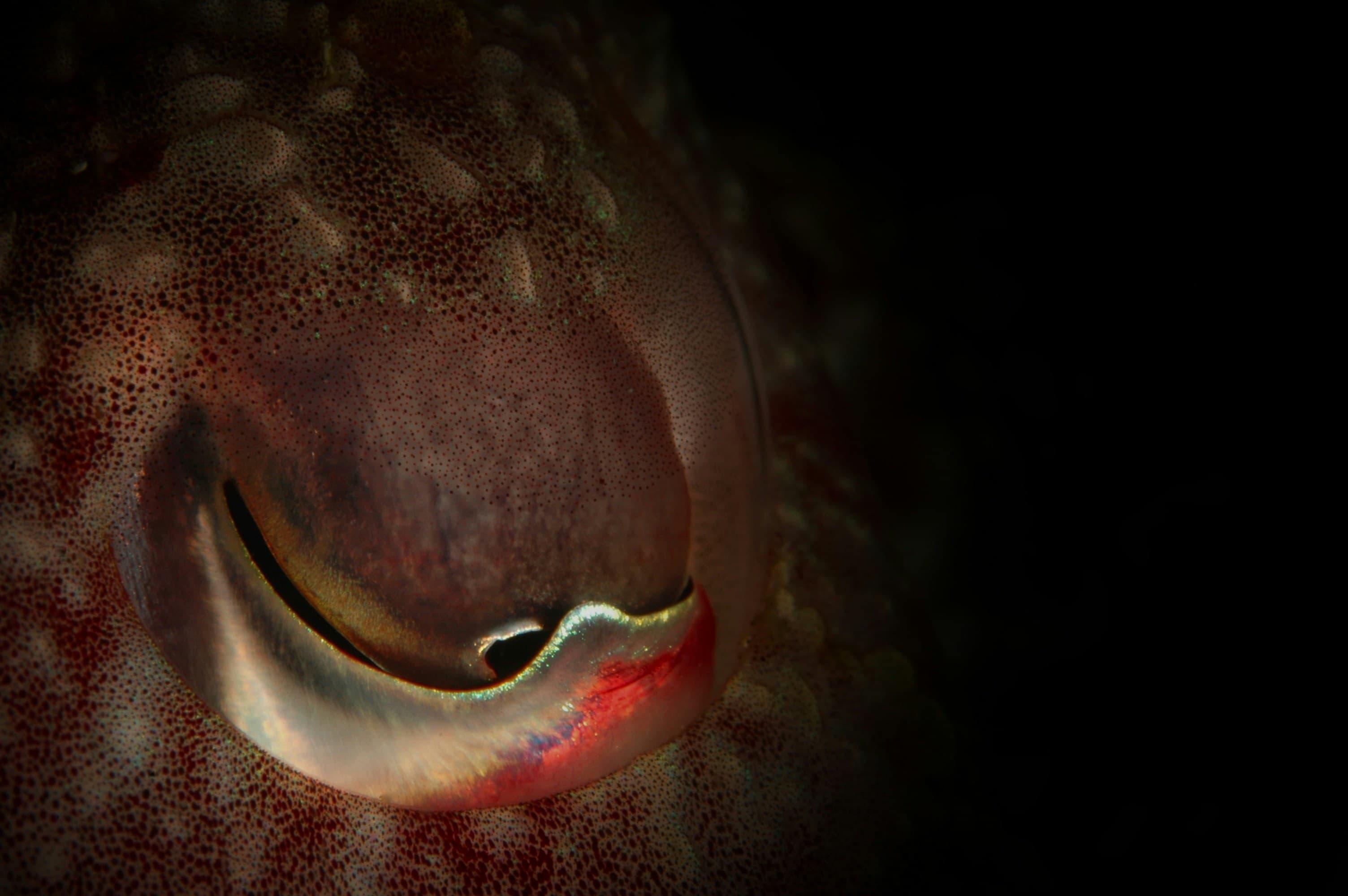
Cuttlefish have the highest neuron-to-body ratio of any invertebrate. Their brain is large and complex relative to body size, with well-developed optic lobes that process visual information from W-shaped pupils giving them near-360-degree vision. Like octopuses, they have a distributed nervous system with neural tissue throughout their arms. They have specialised lobes dedicated to controlling their chromatophores — up to 10 million pigment-containing cells — that create their extraordinary visual displays.
Behaviour & Intelligence
Cuttlefish passed a version of the classic 'marshmallow test' — they resisted eating an immediately available shrimp when they knew a preferred food (live crab) would be available later. This delayed gratification ability, previously thought rare outside primates, indicates forward planning and self-control. Male cuttlefish can simultaneously display female colouration on one side of their body (to deceive a rival male) while displaying male courtship patterns on the other side (to attract a female) — two different messages displayed simultaneously.
Did you know
Cuttlefish are completely colour-blind, yet they produce some of the most spectacular colour displays in the animal kingdom. Scientists believe they use polarised light — invisible to humans — to communicate through patterns imperceptible to predators. They essentially have a secret visual communication channel.